
When surgery for endometriosis is indicated, choosing the surgical route is only part of the decision. Another essential question is what surgical strategy should be used to treat the lesions that are found.
During surgery, the goal is to treat lesions safely and as completely as possible when this is appropriate. Depending on the characteristics of each lesion, its depth, the organ involved and the patient's clinical context, different techniques may be used.
These strategies are generally called excision and ablation. Although the terms may sound purely technical, the choice involves disease depth, the organ affected, preservation of tissue function, surgical safety and the patient's reproductive goals.
There is no single answer for every form of endometriosis. The technique is defined individually, according to the lesion and the needs of each patient.
What does it mean to remove an endometriosis lesion?
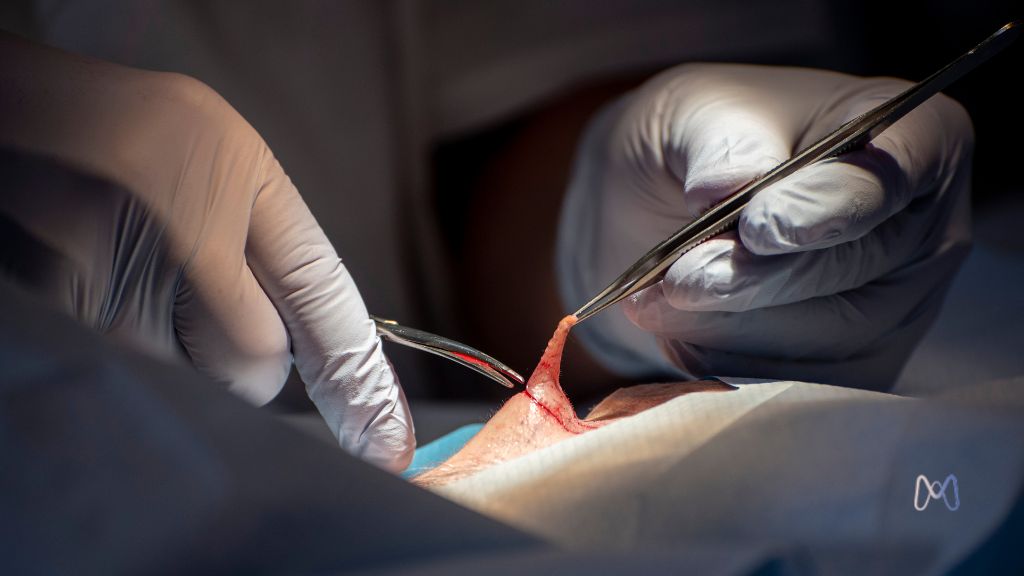
Removing a lesion means performing excision. The surgeon identifies the limits of the abnormal tissue, separates it from nearby structures and removes the fragment.
The tissue that is removed can be sent for pathology analysis. This may confirm tissue compatible with endometriosis and, in selected situations, help rule out other diagnoses.
Excision is not simply cutting out a visible spot. In deep disease, the surgeon must understand how far the lesion extends, which anatomical planes have changed and which organs must be protected.
What does cauterization or ablation mean?
In ablation, the lesion is destroyed by energy applied to the tissue. This can be done with electrosurgery, laser, argon plasma or other resources, depending on the procedure and available structure.
Patients often use the word cauterization broadly, but not all ablative techniques work in the same way. They vary in energy depth, heat spread and their effect on nearby tissues.
Instead of removing an entire fragment, ablation aims to destroy the tissue that has been identified. For this reason, there may not always be enough material for pathology analysis.
Why may treating only the surface be insufficient?
A lesion visible on the surface may be only the outer part of a deeper change. Destroying only the apparent point may fail to reach the full extent of the lesion.
Cauterizing only the surface can mean treating the tip of the iceberg while leaving disease underneath. This is especially important in deep endometriosis, fibrosis or infiltration of structures.
Surface appearance does not always show real depth. Planning must consider preoperative mapping, surgical inspection and the lesion's relationship with the bowel, bladder, ureters, vagina, ligaments, nerves and vessels.
Should every lesion be removed?
The decision must consider several factors:
- Type of endometriosis
- Depth of the lesion
- Organ involved
- Proximity to nerves, vessels and other important structures
- Whether the lesion can be removed safely
- How much healthy tissue would be affected
- The patient's symptoms and goals
- The team's experience
Surgery should not aim to remove tissue at any cost. The goal is to treat clinically relevant disease while balancing disease control, functional preservation and safety.
Is the choice the same in superficial and deep endometriosis?
No. Superficial and deep endometriosis behave differently from an anatomical point of view.
Superficial lesions are located on the peritoneal surface and may be small. In these cases, either excision or ablation may be considered depending on appearance, location and the surgeon's experience.
A 2021 systematic review and meta-analysis found no significant difference between excision and ablation for pain improvement in minimal or mild endometriosis, although the authors emphasized the limited number of studies and the need for larger studies with longer follow-up.
In deep endometriosis, the lesion penetrates below the surface and is often associated with fibrosis and altered anatomical planes. Destroying only the visible part may not adequately treat the affected tissue.
How is deep endometriosis usually treated?
When surgery is indicated for deep disease, the strategy usually involves identifying the extent of the lesion and removing it in a way that is compatible with the organ involved.
- Dissection near the uterosacral ligaments
- Separation of adherent structures
- Removal of retrocervical nodules
- Treatment of vaginal lesions
- Management of bowel endometriosis
- Treatment of bladder or ureter involvement
The word excision alone does not define the extent of surgery. In the bowel, for example, removal may range from superficial shaving to segmental resection, depending on depth, size and circumference involved.
The principle is to adapt the operation to the anatomy and avoid both insufficient treatment and a procedure that is larger than necessary.
Does the ovary require a different decision?
Yes. Treatment of ovarian endometrioma has a specific dilemma: controlling the lesion without unnecessarily compromising ovarian reserve.
An endometrioma is a cyst related to endometriosis. Its wall may be attached to healthy ovarian tissue. Removing the capsule can also remove part of that tissue, while using energy to destroy the inner wall can cause thermal damage to the ovary.
Therefore, neither strategy is completely free of impact.
What is endometrioma cystectomy?
In cystectomy, the endometrioma contents are drained and the capsule is separated from the ovary and removed.
This technique may reduce recurrence compared with simply draining and coagulating the lesion. However, capsule removal can affect ovarian tissue, especially when there is no clear separation plane, when endometriomas are bilateral or when the patient has already had ovarian surgery.
The decision should consider not only whether the cyst can be completely removed, but also the cost of that removal for ovarian function.
When can ablation be considered in the ovary?
Ablative techniques may be considered when preservation of ovarian tissue is especially important or when capsule removal carries a high risk of losing healthy tissue.
In this strategy, the contents are drained and the inner surface of the lesion is treated with energy. Laser or argon plasma may be used depending on availability and experience.
Recent studies suggest a balance: ablative techniques may better preserve some markers of ovarian reserve, while cystectomy may have a lower risk of recurrence. For pregnancy, there is no universal advantage clearly established for all patients.
What is a combined technique?
In some cases, the surgeon may combine strategies. Part of the capsule is removed where a safer separation plane exists, while a region close to more delicate ovarian tissue is treated by ablation.
The goal is to balance disease removal and ovarian preservation. This choice depends on the anatomy found, the surgeon's experience and the patient's reproductive priorities.
Does ablation mean incomplete surgery?
Not necessarily. Ablation can be a deliberate and appropriate strategy for selected lesions, especially when preservation of healthy tissue is important.
The problem occurs when energy is applied only to the superficial appearance of a deep lesion without assessing its real extent.
The debate should not be reduced to the idea that all ablation is inadequate or that all excision is superior. The key questions are which lesion is being treated, in which organ, with what goal and with which risks.
Is pathology analysis always possible?
Excision provides tissue that can be sent for analysis. In ablation, the tissue is destroyed and there may not be adequate material for pathology.
Pathology material may be important when the lesion appearance is atypical, confirmation is needed, there is a suspicious ovarian mass, other diseases must be excluded or the result may change later management.
This does not mean every lesion must be removed only to obtain a biopsy. The need for analysis should be part of surgical planning.
Does the technology used for ablation change the result?
Different forms of energy have different depths, thermal spread and application methods. Bipolar electrosurgery, laser and plasma are not equivalent simply because all can produce ablation.
The result depends on the type of energy, power, duration, intended depth, distance from sensitive structures, thermal control, surgeon experience and tissue treated.
The name of the equipment does not replace understanding how energy interacts with tissue.
How does mapping influence the choice?
Specialized ultrasound and MRI can show the probable location and extent of disease before surgery. This helps anticipate which lesions may require excision, which organs are nearby and which specialists may be needed.
Mapping does not determine every movement during surgery, but it reduces decisions based only on surprise. It also allows the patient to discuss possibilities and limits before the procedure.
Questions patients can ask before surgery
- Which lesions were identified on imaging?
- Does the disease appear superficial or deep?
- Which organs may be involved?
- Is the plan to excise, ablate or combine techniques?
- How will the ovary be preserved?
- Is there risk to ovarian reserve?
- Will tissue be sent for analysis?
- What is the team's experience with this type of lesion?
- What could change depending on surgical findings?
The patient does not need to master surgical technique, but she should understand the logic behind the proposed strategy.
The goal is not to remove as much as possible
Good surgery is not measured by the amount of tissue removed or by the number of cauterized points.
The goal is to treat relevant lesions safely, preserve healthy structures and avoid both leaving important disease behind and being unnecessarily aggressive.
Conclusion
Excision and ablation are different strategies for the surgical treatment of endometriosis. In excision, the lesion is removed and can be sent for pathology analysis. In ablation, tissue is destroyed by energy.
In deep lesions, treating only the surface may leave disease underneath. In selected superficial lesions, the available evidence does not show clear superiority of excision for all pain outcomes.
In the ovary, the decision requires balancing recurrence risk and preservation of ovarian reserve. The best technique is not defined by a general rule, but by lesion type, location, depth, safety, reproductive goals and team experience.
Frequently asked questions about endometriosis excision and ablation
What is the difference between excision and ablation for endometriosis?
In excision, the lesion is surgically removed. In ablation, tissue is destroyed using a form of energy such as electrosurgery, laser or plasma.
Is cauterizing endometriosis always inappropriate?
No. Ablation may be considered for selected lesions. The problem is treating only the surface when a deep lesion exists underneath.
Is excision always better than ablation?
There is no universal answer. The choice depends on lesion type, depth and location, risks to nearby tissues and the patient's goals.
Which technique is used for deep endometriosis?
When surgery is indicated, deep disease usually requires identifying its extent and removing it in a way that is compatible with the organ involved. The strategy varies according to anatomy and safety.
How can ovarian endometrioma be treated?
It may be treated by cystectomy, ablative techniques or combined approaches. The choice considers recurrence, ovarian reserve, fertility, lesion size and previous surgeries.
Can removing an endometrioma reduce ovarian reserve?
Yes. During capsule removal, healthy ovarian tissue may also be removed. For this reason, preservation of ovarian function must be part of planning.
Does ablation preserve the ovary better?
Some studies indicate better preservation of certain ovarian reserve markers, but ablation may be associated with a higher risk of recurrence in some scenarios.
Is the removed lesion sent for biopsy?
Removed tissue may be sent for pathology analysis. In ablation, because the tissue is destroyed, there may not be adequate material for analysis.
Can excision and ablation be combined?
Yes. In selected situations, part of the lesion may be removed and another area treated with energy to preserve healthy tissue, especially in the ovary.